Treatment Plan
As trusted experts we will advise on the best and most costeffective
treatment plan, these can include:

The process involves the excavation of the soil then taking the contaminated soil off site using controlled methods to
minimise the risk of cross contamination, the process is controlled by strict legislation of waste movements. JKC take total
ownership of the project ensuring all legal responsibilities are taken care of on your behalf. Waste is taken to a licensed
landfill for which we hold a Waste Carriers Licence and also have preferential rates with tips that are licensed to take the
waste. From a decade of experience, we can substantially reduce the amount of spoil taken off site by our specialist and
trained team in root tracing.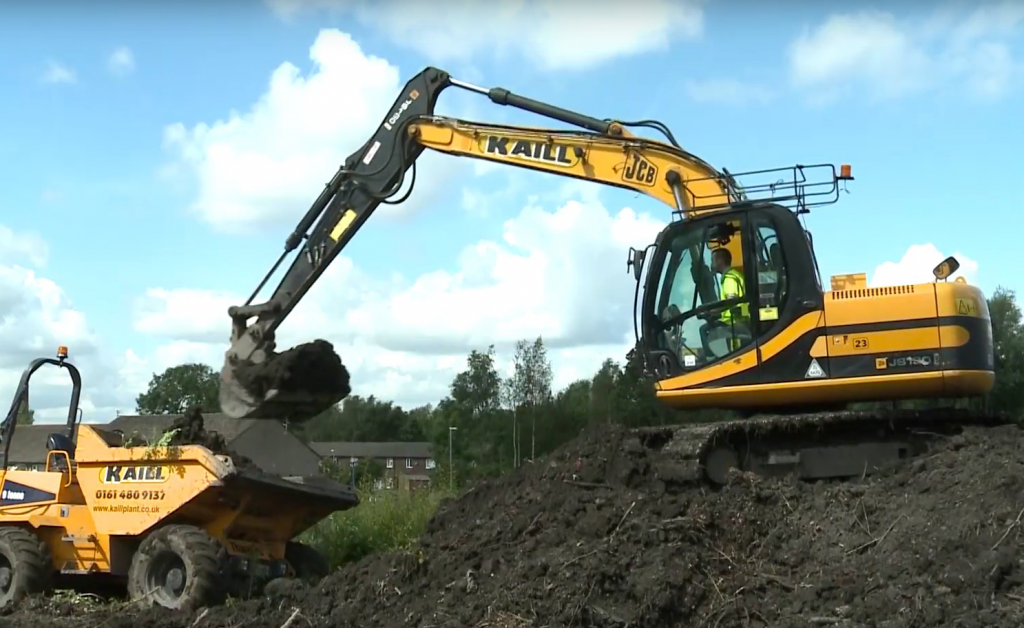
In time critical projects, it is possible to excavate the infested soil and store in a safe area on-site for future treatment of
herbicide. In a controlled move the infestation can be quarantined within the site boundary, clearly marked and protected
with a root barrier in place. The barrier would prevent further contamination, leaving the main site available for continued
development. The infestation would be treated using stem injection at a later, more convenient time.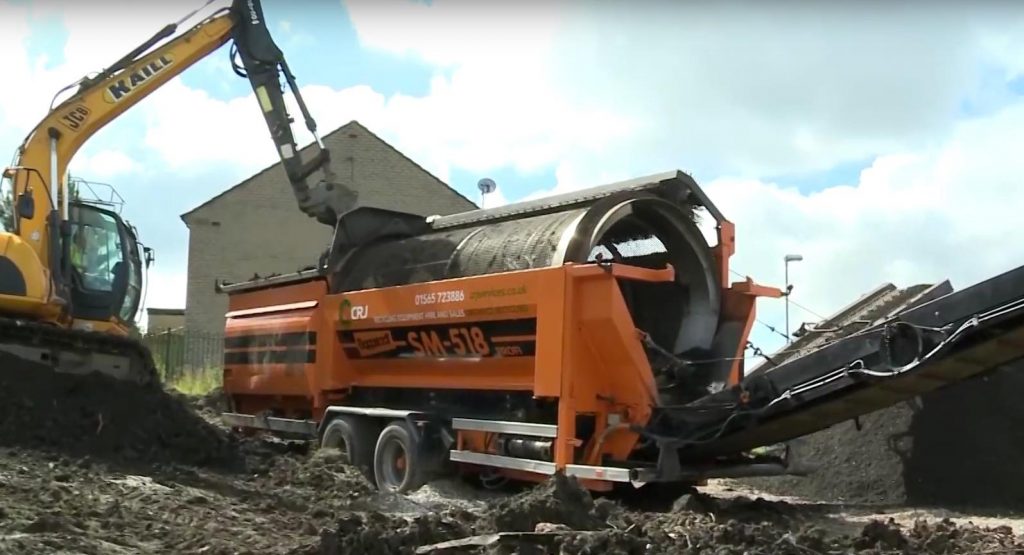
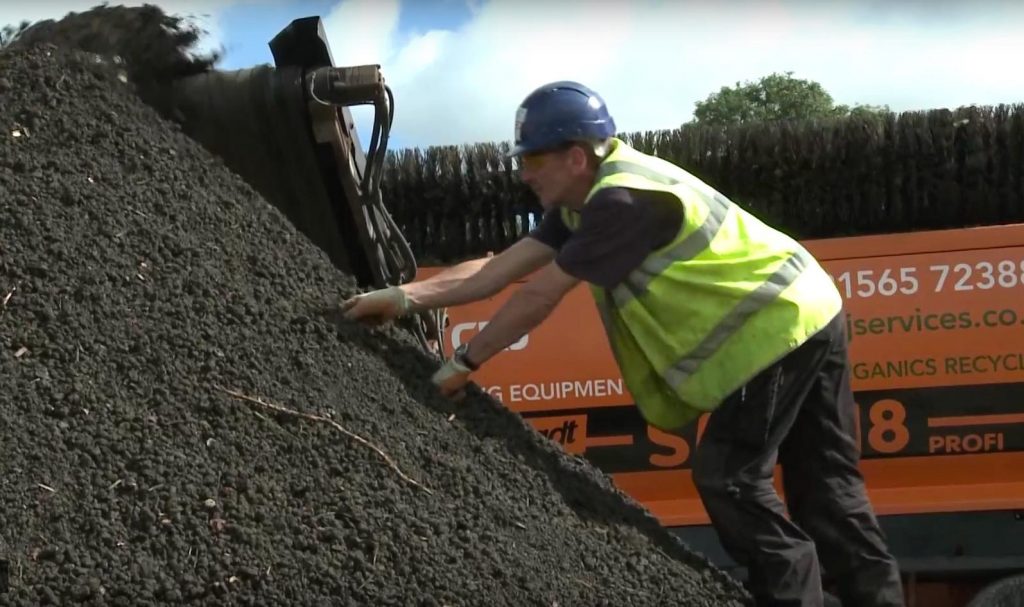
When the project is time critical and space restricted, it may be possible to excavate the infestation and then bury the
contaminated soil in a specially designed interwoven sealed membrane capsule. The site must not be disturbed after
excavation and re-burial and clearly marked on all site plans. The Environment Agency need to be advised that this process
has taken place and plans approved with them.
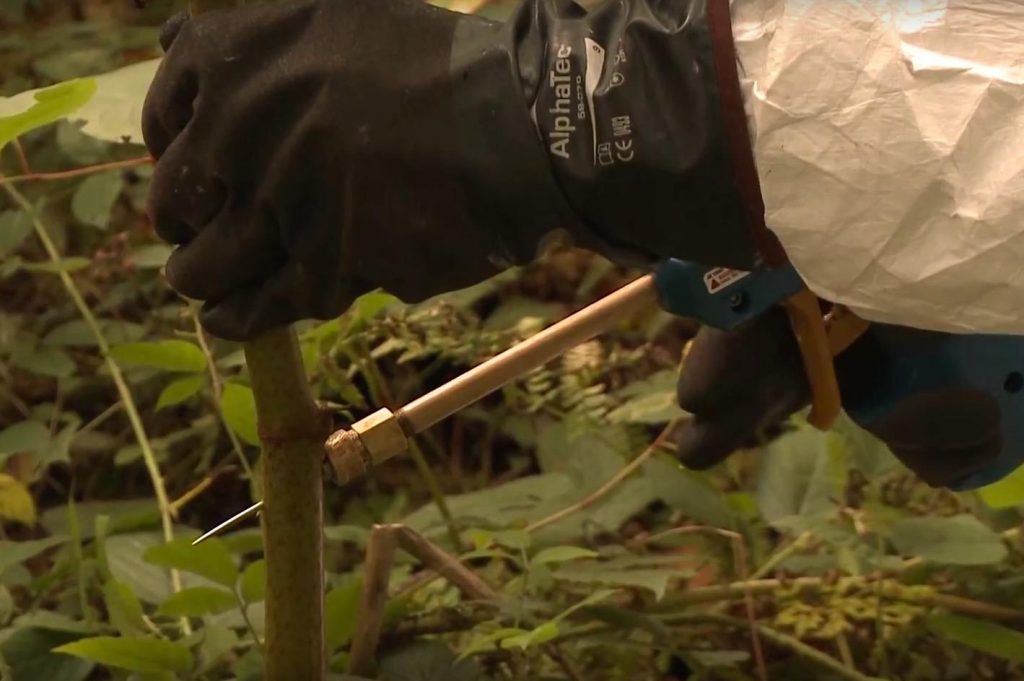
Our unique stem injection process, which is proven to be the most effective and environmentally-friendly form of treatment,
has been regularly praised in the press. With Japanese Knotweed and other invasive plants occupying a vast number of
development sites in the UK, and our reputation for excellent and effective treatment, we are sure we will continue to grow.
Stem injection involves injecting a concentrate of glyphosate herbicide into each cane of the weed using specialist
equipment specifically designed in the treatment of Japanese knotweed.
Japanese knotweed absorbs the glyphosate into the rhizome with a faster absorbency rate than that of foliar spraying. Less
risky to the environment, as the injected herbicide has no effect on the surrounding vegetation and is also safe to use near
water, stem injection is a more effective eradication method.
Results will be seen within two weeks. From injection the weed goes dormant and visible signs of foliar decay appear within
days after treatment. Any canes missed during the process will be visible within the two-week period and a re-application
carried out as part of the treatment process. Treatment is not affected by wind, rain or convection. Stem injection can be
used at anytime during the growing season.
We also specialise in the treatment of Japanese knotweed on or near water by using the stem injection process, which
minimises any risk to water and the environment. We have experience in survey and licence requirements and will ensure all
documentation is filed and complete with the relevant government organisations.
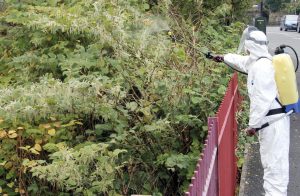
Foliar application is useful for large swathes of infested sites that are not ecologically sensitive areas nor subject to strict
treatment deadlines. Foliar spraying uses herbicides topically – the weed absorbs the herbicide through the leaves.
As such this takes time for the weed to absorb the herbicide down to its rhizome. Only then does this ensure no re-growth
occurs. A number of treatments are required for effectiveness and may take up to 24 months to complete. Foliar spraying is
dependent on weather conditions and only realistically effective, due to its growth cycle, in the Autumn.